
Artificial Intelligence (AI) automotive industry ko totally badal raha hai — ab ek naya era aa gaya hai jahan safety, efficiency aur user experience sab next level pe hain. Iska impact car industry pe literally huge hai.
Aajkal automotive industry full-on AI technology apna rahi hai so that operations aur smooth ho jaayein aur vehicles ka overall performance bhi improve ho. Big data, IoT, AI, aur ML ka use karke, artificial intelligence ne pura game hi change kar diya hai — chahe design ho, manufacturing ho, ya driving experience. Autonomous vehicles se leke advanced safety systems tak, AI ke benefits automotive world mein seriously massive hain.
Use cases of AI in the automotive industry
- Diver Assitance
- Personal Assitant
- Quality control
- Autonomous vehicles
- Passenger experience
- Connected cars
- Driver monitoring
- Supply chain management
- AI in Designing
- AI in manufacturing
- Automotive insurance
Benefits of AI in the automotive Industry
- Improved Safety
- Predictive Maintenance
- Enhanced Driver experience
- Autonomous Driving
AI in ADAS and Autonomous Mobility
Autonomous driving ab sirf ek wild idea nahi raha jaise pehle lagta tha. Pichle kuch saalon mein iski popularity kaafi badh gayi hai, kyunki yeh future ke mobility ko completely badalne ka promise karta hai.
AI ek major reason hai jiske wajah se Autonomous driving (AD) itni fast progress kar rahi hai. Ye pura system AI pe depend karta hai — environment ko samajhne, decisions lene, aur gaadi ko control karne ke liye.
Artificial Intelligence in ADAS: Detection, Strategy, and Implementation
Awareness & Sensing:
Perception Algorithms means wo AI systems jo sensors (jaise cameras, LIDAR, radar, aur ultrasonic sensors) ka use karke gaadi ke aas-paas ka environment samajhte hain. Ye systems Convolutional Neural Networks (CNNs) aur deep learning algorithms pe based hote hain, jo objects ko detect, classify, aur track karte hain — matlab gaadi ko samajh mein aata hai ki kaun-sa object doosri gaadi hai, kaun pedestrian hai, traffic signs kahan hain, aur obstacles kidhar hain.
Pehle sensing ya perception ke liye classical computer vision (CV) methods use kiye jaate the. Ab Continental ek top supplier hai high-performance, modular aur robust camera sensors ka — ye sensors scalable hain, and it has come with smart camera option, jo NCAP (New Car Assessment Program) ke ADAS functions ko support karte hain. Saath hi, satellite cameras bhi use hote hain jisse system L2+ se L4/L5 level autonomous driving tak scale up kar sakta hai. Not just that, radar, lidar aur ultrasonic sensors bhi system ki capabilities ko aur improve kar rahe hain.
Now, abhi naye tech jaise multi-channel aur elevation ke saath — jise 4D sensing radar bhi kehte hain — introduce ho rahe hain. Ye radars “chirp chirp” transformations, micro-doppler jaise advanced features use karte hain. LIDAR side mein bhi kaafi upgrade hua hai — jaise MEMS-based (Micro Electro Mechanical Systems) LIDARs, configurable wide aur long-range Lidars, aur advanced ultrasonic jo near se leke long distance tak better detection dete hain.
Continental bhi is field mein top player hai — wo high-performance 4D premium long-range radar sensors aur short-range radars supply karta hai, jo automated driving mein help karte hain. Inke through features jaise EBA (Emergency Braking Assist), ACC (Adaptive Cruise Control), lane change assist aur blind spot warning smooth aur reliable ho jaati hain.
Yeh saare sensors jointly bahut saara useful data dete hain, jo AI aur deep learning applications ke kaam aata hai. Isse perception performance aur better ho jaati hai — jo pehle limit tak hi pahunch pa rahi thi because of the classic method, ab wo aage badh sakti hai.
Strategy:
Path Planning Algorithms: AI algorithms vehicle ke liye sabse safe aur efficient route nikalne mein help karte hain. Ye algorithms real-time mein decision lete hain so that vehicle easily complex environment mein navigate kar sake.
Action:
Control Algorithms: AI-based control systems vehicle ke steering, acceleration aur braking ko handle karke planned path ko follow karte hain. In systems mein Model Predictive Control (MPC) aur Proportional-Integral-Derivative (PID) jaise algorithms use hote hain — jinhe AI techniques ke through optimize kiya jata hai so that vehicle stable rahe aur passengers ko smooth, comfortable ride mile.
AI, SDVs & OTA:
At this time Software-Defined Vehicles (yaani SDVs) or Over-the-Air (OTA) updates ke time mein, AI models continuous real-world data aur fleet ke performance ke base pe improve hote ja rahe hain. Simple words mein bolein toh — vehicles jab road pe chalti hain, unse data collect hota hai. Agar koi issue ya unusual situation milti hai, toh wo record karke engineers analyse karte hain.
Phir engineers us data ko dekh ke patterns identify karte hain, bugs fix karte hain, aur aise problems handle karte hain jo pehle soche bhi nahi ja sakte the. Is new data se AI model ko dobara train kiya jata hai so that wo aur accurate aur reliable bane.
Jab updated model ready ho jata hai, toh usse OTA means (over the air) update ke through saari vehicles mein send kiya jata hai — bina manually kuch kare. Is process se na sirf SDVs zyada safe, efficient aur reliable bante hain, rather wo hamesha latest tech ke saath update rehte hain, naye challenges aur environments ke according adapt karte hue.
Intelligent Systems for Driver Monitoring & Access Without Devices
Continental ke liye car ka interior hi main focus hai — sirf safety aur comfort tak limited nahi. Yahan baat hoti hai experience ki. Driver Monitoring Systems (ya DMS) AI ka use karke vehicle ki safety ko next level pe le jaate hain. Ye system cabin ke under installed cameras aur sensors se data analyze karta hai so that pata chal sake driver thaka hua hai, dhyaan bhatak raha hai, ya thoda impaired lag raha hai. Facial recognition, eye-tracking, aur behavior analysis jaise techniques real-time me monitor karti hain aur agar kuch serious lage to driver ko alert bhi karti hain — ya kabhi kabhi automatically action bhi le leti hain.
Keyless entry bhi ek AI ka cool use case hai. Authentication yaani ki user ko verify karna, car ke existing sensors se hota hai. Ab ye authentication alag-alag tareekon se ho sakta hai — jaise iris scan, voice, fingerprint ya face recognition. AI ke help se multi-enrolment, gait pattern (yaani chalne ka style), remote delegation aur remote unlock jaise issues easily solve kiye ja rahe hain.
AI Enhancing the User Experience:
Proactive Maintenance:
AI algorithms vehicles ke data ko analyse karke pehle se hi bata dete hain ki kaunsa part fail hone wala hai ya maintenance kab chahiye. Machine learning models sensor data mein patterns detect kar lete hain, jisse problems hone se pehle hi predict kar liya jaata hain — isse downtime aur maintenance ka cost dono kam ho jaata hai.
Battery Management Systems (BMS):
EVs ke liye, AI-powered Battery Management System (BMS) battery ke performance aur life dono improve karta hai. Ye AI models predict karta hain ki battery kitna chalegi, charging cycles ko smartly handle karta hain, aur cells ke load ko balance karke battery ko efficient aur safe banaye rakhta hain.
In-Car Entertainment Systems:
AI ke aane se infotainment systems kaafi smart ho gaye hain. Ab Large Language Models (LLMs) jaise GPT-4 use hote hain so that voice assistants aur natural aur intuitive feel dein. means ab tum apni car se baat karte ho toh woh literally samajh bhi sakti hai tum kya chaah rahe ho! AI-powered systems ab personalised recommendations dete hain, real-time navigation mein madad karte hain, aur tumhare dusre smart devices ke saath easily connect ho jaate hain.
Voice Support:
Car companies usually third-party voice assistants use karna pasand karti hain, but kuch brands apne own voice-recognition system banate hain. Aise AI-enabled personal assistants se car chalate waqt kaafi kaam asaan ho jaata hai — jaise call karna, AC ka temperature adjust karna, radio station change karna, music play karna, ya phir fuel tank mein kitna petrol bacha hai wo batana, aur bhi bahut kuch.
Most important thing is voice recognition tools kaafi personalized hote hain — matlab yeh tumhari pasand, interests yaad rakhte hain aur tumhare past ki activities use ke basis par suggestions bhi dete hain.
Customer Experience:
AI ka main goal hai driving experience ko completely change karna — so that driver aur passengers dono ko zyada safety aur comfort mil sake.
car chalate time passengers ke comfort aur safety ko dhyaan mein rakhte hue, car companies apni vehicles ko new technology se upgrade kar rahe hain — jaise IoT (internet of things), image data, NLP, aur object identification.
Yeh feature passengers ko allow karta hai ki wo apni choice ke commands de sakein — jaise apna favorite music sunna, ya phir travel ke dauraan khana order karna — so that unka road trip aur bhi enjoyable ho jaaye.
Cost Savings:
Automotive industry mein AI ka use karne se kaafi cost save hoti hai — design se leke manufacturing tak, har stage pe efficiency increase ho jaati hai aur expenses kam ho jaate hain.
Agar hum manufacturing process ko optimise karein, supply chain ko better banayein, aur vehicles mein hone waali problems ko pehle hi identify kar lein, toh AI ke through costs kaafi had tak kam ki ja sakti hain.
Safety Challenges:
Reliability: AI systems ko har tarah ke driving conditions mein reliable banana ek big challenge hai. AI models ko biggest datasets pe train karna padta hai jisme har possible situation cover ho, so that real-world mein sahi kaam karein. but hamesha kuch “edge cases” hote hain — aise situations jinke liye AI model trained ya prepared nahi hota, aur unko predict karna bhi mushkil hota hai.
Security Issues: Threats from Adversarial Attacks
Adversarial attacks basically test karte hain ki autonomous driving systems (ADS) kitne strong hain. Ye attacks unke deep neural networks (DNNs) ko confuse kar dete hain taaki wo traffic signs ko galat identify kar lein. Ye attacks malicious bhi ho sakte hain ya natural bhi, aur real world mein ye printed signs ya stickers ke through kiye ja sakte hain. In attacks mein chhote-chhote changes (perturbations) add kiye jaate hain jo insaan ko maybe dikhe bhi na, but DNNs ko easily fool kar deti hain.
Attacks different-different type ke ho sakte hain — jaise digital attacks, visible attacks, invisible attacks, aur physical attacks.
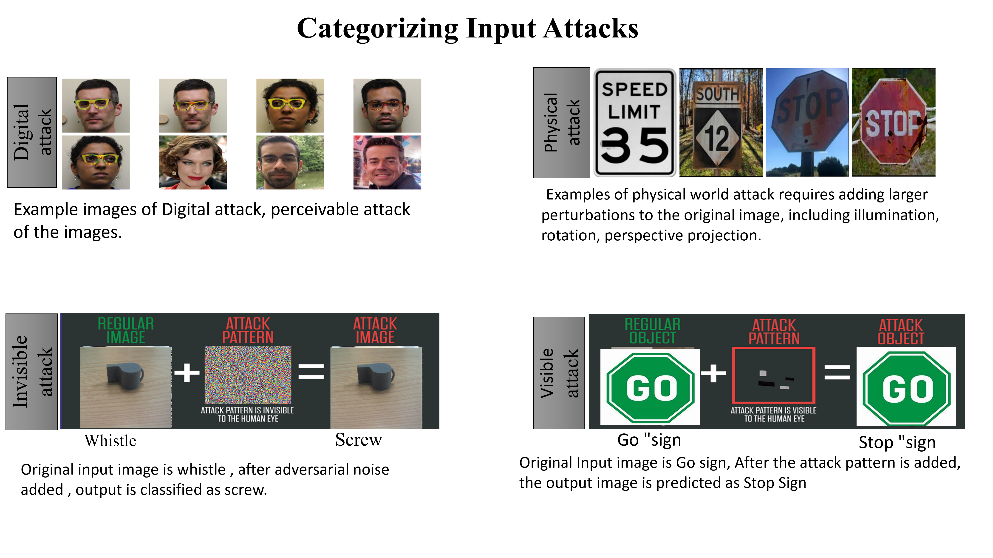
AI system ke liye 2 main things handle karni padti hain — Data issues aur Model issues.
Data issues means jaise — labelling sahi hai ya nahi, outliers hain kya, kya data enough hai, kahin data leak toh nahi ho raha, aur dataset balanced hai ya nahi.
Model issues thode se technical hote hain — inko handle karne ke liye proper testing frameworks use karte hain jaise failure model analysis, confusion matrix test, hard positive/negative tests, white noise tests, adversarial robustness tests, aur bias & fairness tests.
Clarity of understanding:
See, traditional algorithms jaise decision trees aur Bayesian nets understand karne mein easy hote hain, means explain karna simple hota hai — but unki accuracy thodi kam hoti hai. on the other side, deep learning networks it's very accurate, par samajhna mushkil. Jaise self-driving cars mein jo deep learning use hoti hai, wo itni “deep” hoti hai ki har layer mein kya chal raha hai, ye understand karna almost impossible ho jaata hai — isiliye fault find karna bhi tough ho jaata hai. Is wajah se explainability bahut zaroori hai — chahe wo psychological, socio-technical, legal ya philosophical angle se ho.
Real life mein, autonomous driving systems usually different methods ka mix use karte hain — jaise decision trees, rule-based systems, saliency maps, ya LIME (Local Interpretable Model-agnostic Explanations) — taaki unke actions ka reason samjha ja sake. Matlab, system bata sakta hai ki car ne koi specific route kyu liya, speed kyu kam ki, ya kyu ruk gayi. Ye transparency engineers ko system improve karne mein madad karti hai, ensure karti hai ki decisions safety standards ke according ho, aur users aur stakeholders ka trust bhi build karti hai.
Aur haan, Continental ek startup ke saath jointly kaam kar raha hai jinka AI testing platform kaafi advanced hai — yeh system automatically problems detect karta hai, unka root cause find karta hai, aur poore AI development process ko approx. 3x faster bana deta hai. Saath hi, production stage mein AI ke risk ko 90% tak kam kar deta hai.
Yaar, AI ka automotive industry mein aana ek big game-changer move hai — aisa lagta hai jaise jo cheezein kabhi sci-fi movies mein dekhi thi, wo ab reality ban gayi hain. AI ab gaadiyon ko zyada safe, efficient aur user-friendly bana raha hai. Autonomous ya self-driving cars toh is poori revolution ke center mein hain. Predictive maintenance, smart traffic management, aur personalised in-car experience jaise features ke saath, AI pure process ko badal raha hai ki hum vehicles ko kaise sochte aur use karte hain.
looking forward to see, AI aur automotive innovations ka combo ek zabardast future promise karta hai — jahan mobility solutions next level honge. Industry continuously limits cross kar rahi hai, so that world aur safe, efficient aur connected ban sake. Fully autonomous, AI-driven vehicles ka safar insaan ki creativity aur progress ke jazbe ka perfect example hai. Matlab, future full-on bright lag raha hai — smarter, sustainable aur human-centered transportation ke saath.
Image and News Courtesy: ETauto